Our team is here to help you design, price, and deploy the right system.

Our team is here to help you design, price, and deploy the right system.
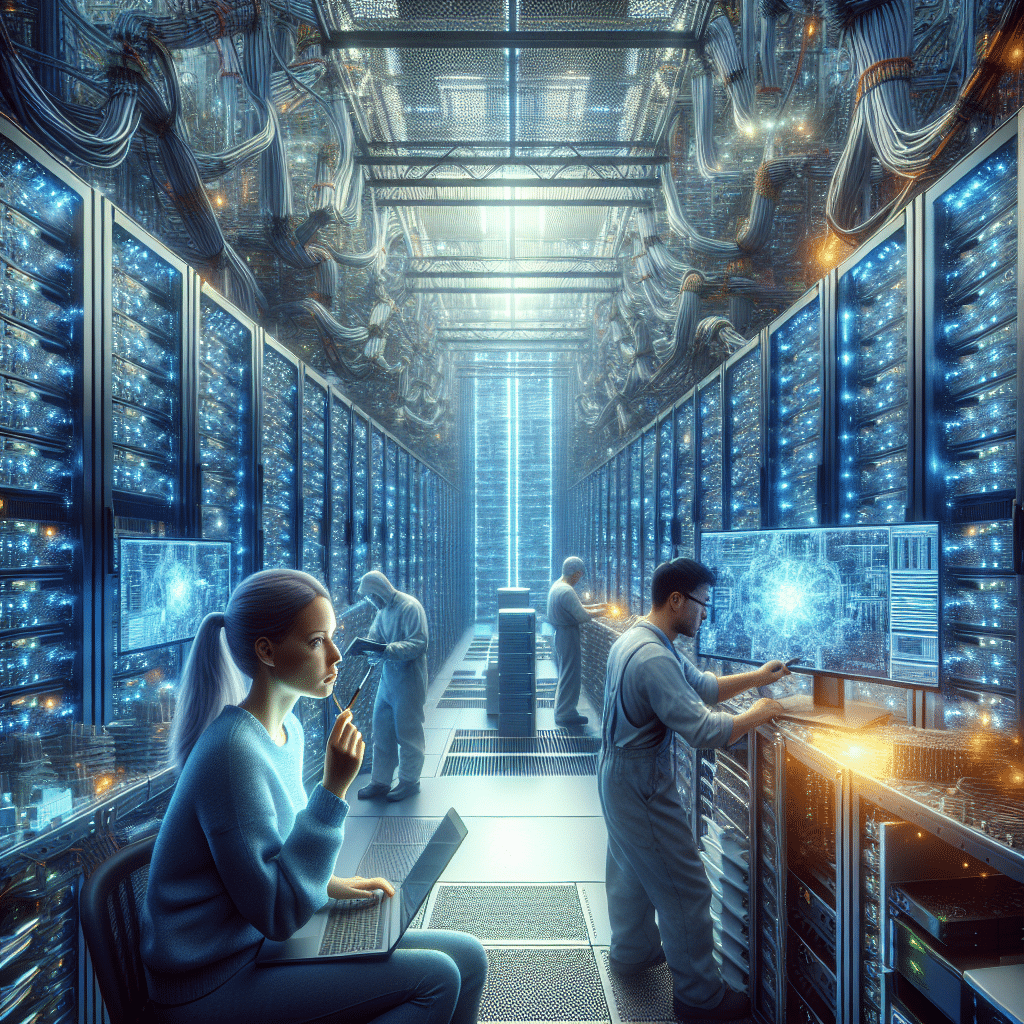
The economics of digital infrastructure are being rewritten. Bitcoin mining companies that spent years building power-dense facilities and negotiating utility agreements are now leveraging those assets for a different purpose: AI compute. Recent deals totaling billions of dollars signal that this isn’t a tentative experiment—it’s a strategic transformation reshaping both industries. The revenue differential between Bitcoin mining and AI compute has become impossible to ignore. AI infrastructure generates between $10 million and $20 million per megawatt annually, compared to approximately $1 million per megawatt for Bitcoin mining operations. For companies sitting on secured power capacity and cooling infrastructure, the math is compelling. Hut 8’s recent moves illustrate the scale of this transition. The company secured a $7 billion, 15-year lease deal with Fluidstack backed by Google, positioning its GPU-as-a-Service subsidiary as a major AI compute provider. The company has already deployed more than 1,000 NVIDIA H100 GPUs to serve AI clients. IREN landed a $9.7 billion five-year deal with Microsoft for AI infrastructure at its Texas facility. CleanSpark completed an upsized $1.15 billion offering of convertible notes and recently acquired 447 acres in Brazoria County, Texas, specifically to construct large-scale data centers for AI and high-performance computing. Industry analysts project that mining revenue will drop from 85% of total revenue in early 2025 to under 20% by the end of 2026 for companies that have secured AI contracts. The pivot isn’t gradual—it’s accelerating. Bitcoin mining operations share fundamental infrastructure requirements with AI data centers, which explains why the transition is technically feasible. Both workloads demand substantial power capacity, robust cooling systems, and facilities designed for continuous, high-density computing. Mining facilities have already solved many of the challenges that new AI data center projects face. They’ve secured utility interconnections—often in regions with favorable power costs. They’ve built relationships with grid operators. They’ve deployed cooling systems capable of handling concentrated heat loads. And critically, they’ve developed operational expertise in managing power-intensive compute infrastructure around the clock. The infrastructure convergence extends to location strategy as well. Texas, which became a hub for Bitcoin mining due to ERCOT’s deregulated market and competitive power rates, is now attracting massive AI investments. OpenAI and Oracle’s $500 billion Stargate complex in Abilene will require 1.2 gigawatts when completed—enough to power over one million homes. While the strategic logic is sound, the technical transition requires significant infrastructure investment. AI workloads demand different thermal management approaches than ASIC mining equipment. GPU clusters generate more concentrated heat loads and require precision cooling to maintain performance and equipment longevity. Power distribution also requires upgrades. AI deployments typically need higher-quality power with tighter voltage regulation and better redundancy than mining operations historically required. Facilities transitioning from mining to AI often need to retrofit electrical systems, add uninterruptible power supplies, and implement more sophisticated monitoring and failover capabilities. The cooling transition is particularly significant. While some mining operations already use liquid cooling for newer ASIC generations, AI deployments increasingly require direct-to-chip liquid cooling or immersion systems. JLL projects that 80% of new AI facilities will incorporate liquid cooling, reflecting the physical limitations of air cooling at modern GPU power densities. For companies pursuing dual-use strategies—maintaining mining operations while adding AI capacity—infrastructure planning becomes more complex. Different workloads may require different cooling approaches, power quality levels, and operational procedures within the same facility. The ERCOT grid in Texas offers a window into how this transition affects regional power dynamics. Large-load power requests have surged to 226 gigawatts in 2025—nearly four times the 63 gigawatts recorded at the end of 2024. While Bitcoin miners once dominated these requests, AI companies now account for roughly 73% of new applications. The difference in grid behavior between mining and AI operations adds complexity for grid planners. Bitcoin miners have historically served as flexible loads, curtailing operations during peak demand periods in exchange for favorable rates. AI data centers operate differently—training runs and inference workloads require consistent power delivery and cannot easily pause during grid stress events. ERCOT CEO Pablo Vegas has projected that grid needs will grow from approximately 85,000 megawatts to 150,000 megawatts within six years. The Public Utility Commission of Texas has responded with proposed rules requiring customers seeking 75 megawatts or more to meet stricter coordination requirements with utilities. The mining-to-AI pivot creates substantial demand for infrastructure upgrades. Facilities need enhanced power systems capable of supporting AI-grade loads. Cooling systems must evolve from air-based or basic liquid cooling to sophisticated direct-to-chip or immersion solutions. Electrical infrastructure requires upgrading to meet higher reliability and power quality standards. Companies pursuing this transition face tight timelines. The window to capture AI infrastructure demand is open now, but competition for equipment, construction capacity, and utility interconnections is intensifying. Organizations that can execute infrastructure upgrades quickly will be positioned to secure the long-term contracts that define this market. The convergence of Bitcoin mining and AI infrastructure represents one of the largest infrastructure buildouts in the digital economy. The companies and infrastructure providers that recognize this shift—and build accordingly—will shape the next decade of compute capacity. Whether you’re scaling Bitcoin mining operations or transitioning to AI/HPC hosting, BixBit USA provides the power and cooling infrastructure to support your growth. Our systems are designed for high-density deployments with faster turnaround times than industry competitors.The Numbers Tell the Story
Why Mining Infrastructure Translates to AI
The Infrastructure Upgrade Challenge
Grid Dynamics and the Texas Example
What This Means for Infrastructure Providers
Ready to Power Your Infrastructure?